NASA’s InSight is first mission to Mars since 2012

By Associated Press, adapted by Newsela staff

CAPE CANAVERAL, Florida — Mars has its first U.S. visitor in years. The three-legged, one-armed spacecraft will dig deep and listen for quakes.

NASA’s InSight made its grand entrance through the rose-tinted skies around Mars on Monday, November 26. The visit came after a six-month journey of 300 million miles. It’s the first American spacecraft to land since the Curiosity rover in 2012 and the first dedicated to exploring underground.

Continue reading “NASA’s InSight is first mission to Mars since 2012”
Issue Overview: Earthquake readiness

By Bloomberg.com, adapted by Newsela staff

Almost two-thirds of the world’s population is expected to live in cities by 2050.

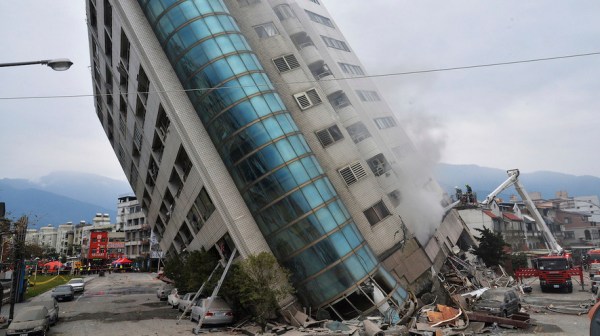
At least half of large cities are at risk of being hit by a major earthquake. Some such cities are Tokyo, Japan; Mexico City, Mexico; and San Francisco and Los Angeles in California.

These places must prepare for earthquakes. However, these places also have leaders who are only elected for short periods. They may not be thinking about such long-term problems.

It is impossible to predict when major earthquakes will happen. An earthquake might strike once in a lifetime, or not at all. What steps should be taken today to protect people and buildings from such a threat? Continue reading “Issue Overview: Earthquake readiness”

Boaty McBoatface goes on its first Antarctic mission

By Nicola Slawson, The Guardian, adapted by Newsela staff

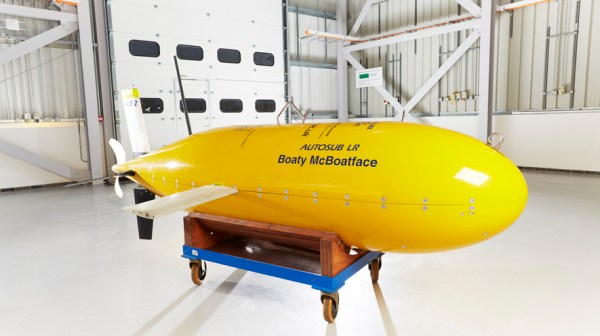
A small yellow robot submarine is being sent on its first Antarctic mission. The submarine is called Boaty McBoatface, after a competition to name a new polar research ship backfired.

Boaty has arguably one of the most famous names in recent maritime history. It is a new type of autonomous underwater vehicle (AUV), which will be able to travel under ice and reach depths of 6,000 meters. Boaty will transmit the data it collects to researchers via a radio link. Continue reading “Boaty McBoatface goes on its first Antarctic mission”

Big Questions: What makes oceans so salty?

By Rachel Feltman, Washington Post, adapted by Newsela staff
on 06.25.18
Summertime
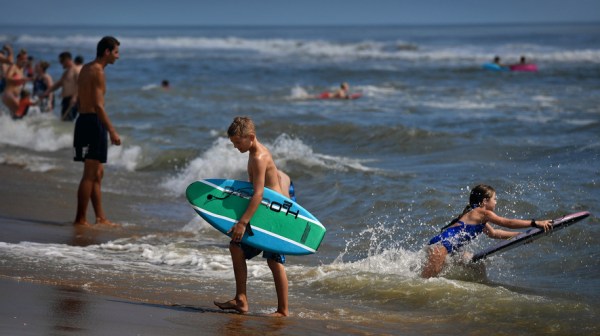
finds many of us at the beach, frolicking in the waves. So when you think of summer,
you probably think of the sounds and smells of a day spent by the ocean. Such sensory memories would be incomplete without the saltiness of the water: the flavor of the brine as some seeps into your mouth, the sting of the water as it hits any cuts and scrapes on your skin, the smell and crunch as it dries in your hair. But what gives the seashore its signature saltiness?

Continue reading “Big Questions: What makes oceans so salty?”

Yellowstone’s Ear Spring Geyser Spews Out Water, Steam, Mud, And . . . Human Trash!

From dogonews

By Daksha Morjaria on October 14, 2018

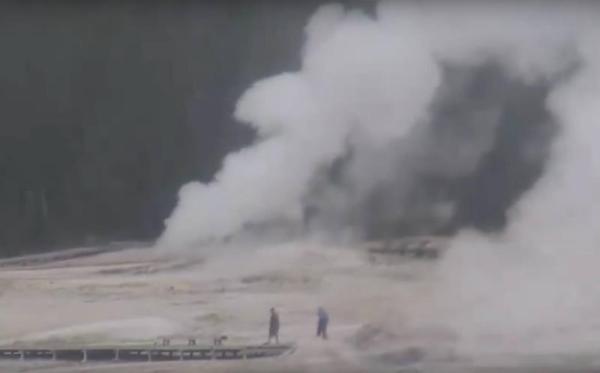
Yellowstone Park officials were thrilled when the Ear Spring geyser suddenly came to life on September 15, 2018. Visitors fortunate enough to be in the area, watched in awe as the hot pool’s largest eruption since 1957, caused sprays of steaming 200 degrees Fahrenheit (93 degree Celsius), water to leap as high as 30 feet (9 meters) in the air. However, the joy turned to shock when employees discovered that in addition to the expected rocks and dirt, the geyser had also ejected human-generated trash. Continue reading “Yellowstone’s Ear Spring Geyser Spews Out Water, Steam, Mud, And . . . Human Trash!”

Blog at WordPress.com.

Up ↑

Design a site like this with WordPress.com
Get started